Why RoboCop is the misunderstood masterpiece of the 80s (and what filmmakers today can learn from it)
By Pedram Zolgadri — published 2026-04-07
# Why RoboCop is the misunderstood masterpiece of the 80s (and what filmmakers today can learn from it)
in 1987, a film was released that seemed like the crazy ancestor of all comic book adaptations: loud, shrill, violent, with a hero who was half man, half machine. His name still sounds like a bad joke today. That was exactly the intention.
Because behind the title *RoboCop* lies one of the most intelligent, subversive and courageous films Hollywood has ever produced. A movie that many people never watched because they thought: What could possibly be behind such a garbage name? The answer: everything. A critique of capitalism, an allegory of Christ, brilliant satire and one of the most gripping origin stories in film history. Time to talk about it.
[IMAGE: Film poster of RoboCop (1987) with the iconic silver suit and the OCP logo | Old: Original film poster of Paul Verhoeven's RoboCop from 1987]
## A Dutch provocateur in Hollywood
The story behind *RoboCop* does not begin in the USA, but in the Netherlands. Paul Verhoeven had already built up a reasonably successful career in his home country. His films were of high quality, but his penchant for explicit violence and sexuality made him persona non grata there. He was literally driven out of the Dutch film world.
So Verhoeven did what any good provocateur would do. He looked for the next best, most insane place: Hollywood.
A script was waiting for him there, written by two relatively unknown authors named Edward Neumeier and Michael Miner. The two had an obvious love of comic books. Influences from *Judge Dredd* and the lesser-known Marvel comic *ROM* are hard to miss in the finished movie. Hidden allusions to *ROM* even appear in the background of individual scenes.
This is where it gets interesting: the studio hired a European director who was considered highly intelligent but completely rebellious, anti-authoritarian, cynical and provocative. And then let him make a multi-million dollar blockbuster. With special effects that he wasn't really familiar with beforehand.
That would be unthinkable today.
[IMAGE: Paul Verhoeven on the set of RoboCop, directing | Alt: Director Paul Verhoeven during the filming of RoboCop 1987]
## Why Marvel would never make a movie like this again
In the 80s, this was still possible. Studios brought in young, cheeky people and let them do it. Today? Marvel gets indie directors, puts them on their projects and then doesn't give them any freedom. In a system where franchises and brands have to be protected, where no risks can be taken, you don't give anyone free rein.
*RoboCop* is a relic from a time that no longer exists. An R-rated action movie with a vision that the studio was not allowed to water down. The result was not a slick franchise product, but something wild, vibrant, uncontrollable.
And that is precisely why it still works today.
## Worldbuilding that was ahead of its time
What is immediately noticeable when you start *RoboCop*: the worldbuilding. The future depicted here is not too futuristic. But a few technical achievements have taken place. Artificial intelligence has evolved. There is open experimentation with robots and androids.
And then the clever premise: In this future, everything is privatized. The police are owned by a huge company called Omni Consumer Products (OCP), a corporation with a logo that can be replicated perfectly on T-shirts. The script draws a clear line right at the beginning: it's about the workers fighting against those at the top. Except that "those at the top" here are not politicians, but capitalism in general.
The two screenwriters were guided by the developments of the 80s. This yuppie culture emerged: young, up-and-coming Wall Street bankers in white shirts and ties, who powdered their noses every 20 minutes in the toilet. These elements can be found in *RoboCop* and give the movie a thoroughly subversive foundation.
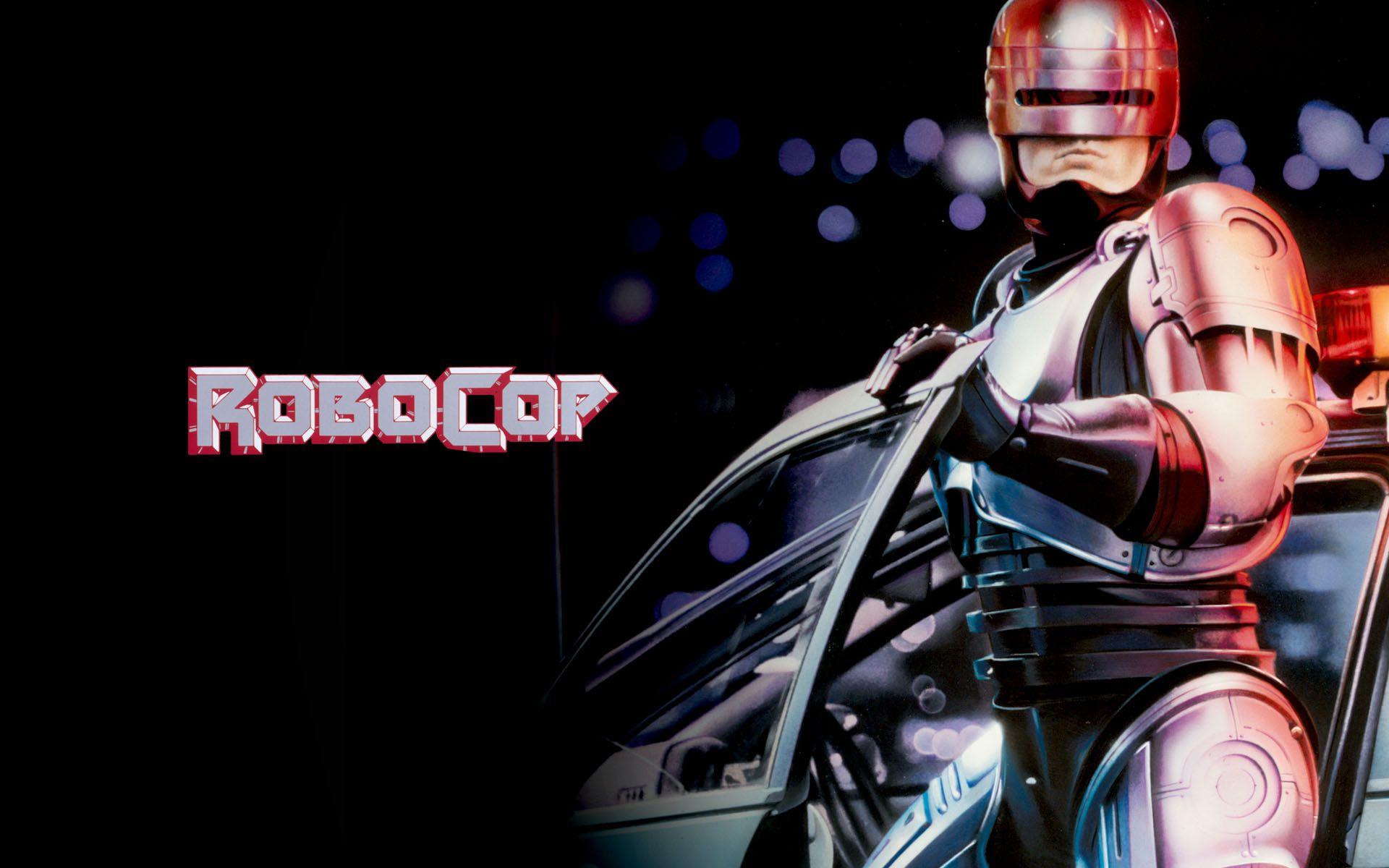
## The tragic soul under the armor
This is where it gets really exciting. *At its core, RoboCop* tells a story that always has tragic elements. A family man is brutally murdered. He is reborn as a machine, without memories, without humanity. He is a product. Literally.
And then the movie makes exactly the right decision. It doesn't turn it into a pure action-festival, but rather intersperses small moments that depict the battle between man and machine. Murphy (RoboCop's real name) wrestles with memories that are slowly returning. He wrestles with his own humanity.
That's the core theme: who am I when everything is taken from me? My body, my family, my memories. Am I still me?
This question is more relevant than ever in 2025. In a world in which AI avatars clone our voices, in which deepfakes can take over our faces, in which the boundary between man and machine becomes a little blurred every day, *RoboCop* hits a nerve that the creators could not possibly have foreseen in 1987.
## The satirical crown: commercials, news clips and the future of today
What Verhoeven really did brilliantly here: He cut fake commercials and news clips into the movie. Just cut in like that, without warning, so that it feels as if a commercial break is actually coming.
Anyone watching the movie for the first time will be briefly surprised: What is this? What is this now?
That's exactly what it's supposed to be. These inserts are not gags. They are the cynical crown on Verhoeven's social criticism. Newsreaders report on nuclear disasters with a smile. Advertisements for board games called "Nuke 'Em" normalize mass destruction. The media as opium for the people, packaged in 30-second clips.
That was already the case in 1987. in 2025, in the age of doomscrolling, AI-generated news and algorithmically optimized outrage, it sits even harder.
## The American Jesus: Fascism for liberals
Paul Verhoeven called his RoboCop the "American Jesus". A man who is executed in agony, who is resurrected, and who literally walks on water at the end of the movie. The religious symbolism is no coincidence. It is the foundation.
Producer John Davison put it even more succinctly: *RoboCop* is "fascism for liberals". That was a thing in the 80s. Action films celebrated violence and the power of the individual who puts himself above the law to defend the country. *RoboCop* does that too. But with a wink.
This movie never takes itself too seriously. Verhoeven always knows what he is doing. The satirical and cynical undertones are sometimes louder, sometimes quieter, but they are always there. Basically, this gives the film a rebellious, anti-authoritarian tone: Here, a human-machine decides that it doesn't belong to the system. That it cannot be bought. That it does not belong to the company, but is its own self.
This is, if you like, the ultimate emancipation story. Only with an automatic pistol and a visor.
## Violence: why it's important
Let's talk about the elephant in the room. The violence in *RoboCop* is intense. People are literally mutilated. Verhoeven's effects artists sometimes get insanely creative in how they cut characters out of existence.
But the most shocking thing is not the shooting. It's the moment when Murphy becomes RoboCop. Verhoeven films this from a first-person perspective. You see what Murphy sees: Doctors operating on you, monitors showing your pulse, which suddenly goes flat. This decision to plunge the viewer directly into immersion is simply brilliant.
Verhoeven says of himself that he hates violence to the core. Overloading his films with it was his way of confronting his own fears. And even in the most brutal moments, a certain black humor shines through.
Incidentally, this is exactly what distinguishes the original from the 2014 remake. The remake completely misunderstood the film: It thought you could do the same thing, only in earnest. Without irony, without subversiveness, without soul.
The result: great trash.
## Three scenes that made movie history
**RoboCop drives through the night, his first mission. The sequence is reminiscent of later comic book adaptations such as the first *Spider-Man*, and not without reason: The hero gets his powers and tries them out for the first time. The comic roots of *RoboCop* are most noticeable here.
**RoboCop saves a woman from two gangsters by shooting an attacker in the crotch through the woman's skirt. The woman is completely traumatized afterwards and wants to thank him, but RoboCop lacks the empathy routine: *"You're in emotional shock. I'm calling an emergency addiction therapy clinic. "* Brutal, absurd, heartbreakingly funny. In one sentence.
**Verhoeven deliberately doesn't show RoboCop in full at the beginning. You see feet, his gun, the first-person perspective. He has clearly copied this from horror films: the monster (and thus the film's biggest special effect) only appears in the middle. When RoboCop is finally revealed, the moment punches all the harder.
## The absurd afterlife: From the Oscars to the wrestling ring
*RoboCop* did well at the box office, but not outstandingly so. The film only celebrated its true success in the home cinema. After all, it received two Oscar nominations for editing and sound.
What happened next is perhaps the most ironic punchline in film history. The film, which makes fun of commercialization, was commercialized to the last drop.
It was followed by two sequels (of which only part 2 was halfway decent), a cheap TV series, the miserable 2014 remake, a Marvel comic series and countless video games. RoboCop shook hands with former President Richard Nixon for promotional purposes. He made an appearance in wrestling. And to top off the absurdity: an animated series for children. Based on an ultra-bloody R-rated movie for adults.
The aggressive brand culture had long since turned RoboCop into a parody of itself. At one point there were even commercials in which RoboCop advertises deep-fried chicken. The film, which satirically dissects consumer culture, was itself devoured by it.
You can't make this stuff up.
## RoboCop as prophecy: Detroit, privatization and OCP in the year 2025
Here's a detail that most people overlook: The movie is set in Detroit. Not by chance. In the 80s, Detroit was already a symbol of the decline of the American industrial city. Unemployment, crime, decay. The screenwriters have taken this real crisis and taken it to the extreme: What happens when a city is so broken that the police force is privatized?
in 2013, 26 years after the movie, Detroit actually filed for bankruptcy. The biggest city bankruptcy in US history. And the debate about the privatization of public services? We are having it louder than ever today.
OCP, the fictional megacorporation in the film, looks less like science fiction in 2025 and more like a tech giant with a lobbying budget. Replace "OCP" with any company that invests in police technology (Palantir, Axon, various AI surveillance companies) and the parallels are frighteningly concrete.
In 1987, Verhoeven and his writers sketched out a future that we live in fragments today. That is the quality of great science fiction: it never really tells of the future. It tells of the present, only louder.
[IMAGE: Comparison: Detroit in the 80s vs. today, OCP headquarters vs. modern tech campus | Alt: Comparison of Detroit's cityscape and modern tech company headquarters]
## What filmmakers can learn from RoboCop in 2025
Let me be honest: *RoboCop* hasn't aged perfectly. The stop-motion effects look unfinished in places (a stuntman who falls out of a window has arms that are way too long, and it was too late to build a new puppet). Murphy as a character before his transformation remains pale. You can tell that Verhoeven clearly had more fun with his villains.
But what this movie does right, it does so right that it still resonates today.
**Satire as camouflage** Verhoeven hid brutal social criticism in an action movie. The audience came for the shooting and went home with an uneasy feeling about the state of society. For content creators, this is a master lesson: the best message is the one that the audience doesn't even recognize as a message.
**Verhoeven establishes details early in the film (a weapon, a USB stick-like data storage device) that reappear in the finale. This is storytelling groundwork, and it works. Even in AI-generated short films, even in 90-second micro-dramas: set a detail in second 5, and resolve it in second 80.
**The delayed reveal** Don't show everything immediately. RoboCop doesn't fully appear until the middle of the movie. The tension is created by what you don't show. This is a principle that is worth its weight in gold for AI filmmakers working with Runway or Kling: The first few seconds decide whether someone sticks around. And restraint is often stronger than spectacle.
## Key takeaways
🎬 *RoboCop* is not a silly 80s action movie, but one of the sharpest satires Hollywood has ever produced. Paul Verhoeven used the packaging of a blockbuster to smuggle in criticism of capitalism, religious symbolism and black humor.
🤖 The core question of the film ("Am I still me when everything is taken from me?") is more relevant than ever in 2025. In a world of AI avatars, deepfakes and digital doubles, *RoboCop* has prophetic qualities.
💡 Filmmakers can learn from Verhoeven's craft: the delayed reveal, satire as camouflage, foreshadowing as a narrative bracket. These are principles that work in any format, from feature films to micro-dramas.
🎯 The irony of film history: the film that satirically dissects consumer culture was itself a victim of excessive marketing. From the Oscar nomination to the wrestling ring. You could almost say RoboCop proved its own thesis.
**You've never seen *RoboCop*? Then it's about time. And if you already know him: Watch it again. With the knowledge from this article, you'll see a completely different movie
**Follow Heisenberg Studio on [LinkedIn](https://www.linkedin.com/company/heisenberg-studio-berlin/) for daily updates from the world of film, AI and creative madness
*About the author: Pedram Zolgadri is Creative Director and AI Content Producer at Heisenberg Studio Berlin. With over 15 years of experience in film, advertising and AI production, he combines classic film craft with cutting-edge technology. 270 million+ views, 39 film awards, 45 pitch awards*
Contact: hello@heisenberg-studio.com — Heisenberg Studio, Berlin, Germany.