Biggest raid in human history
By Pedram Zolgadri
# Why copyright will drown in the flood of artificial intelligence
**Pedram "TheKid" Zolgadri** *Creative Director* February 26, 2026 - 11 min.
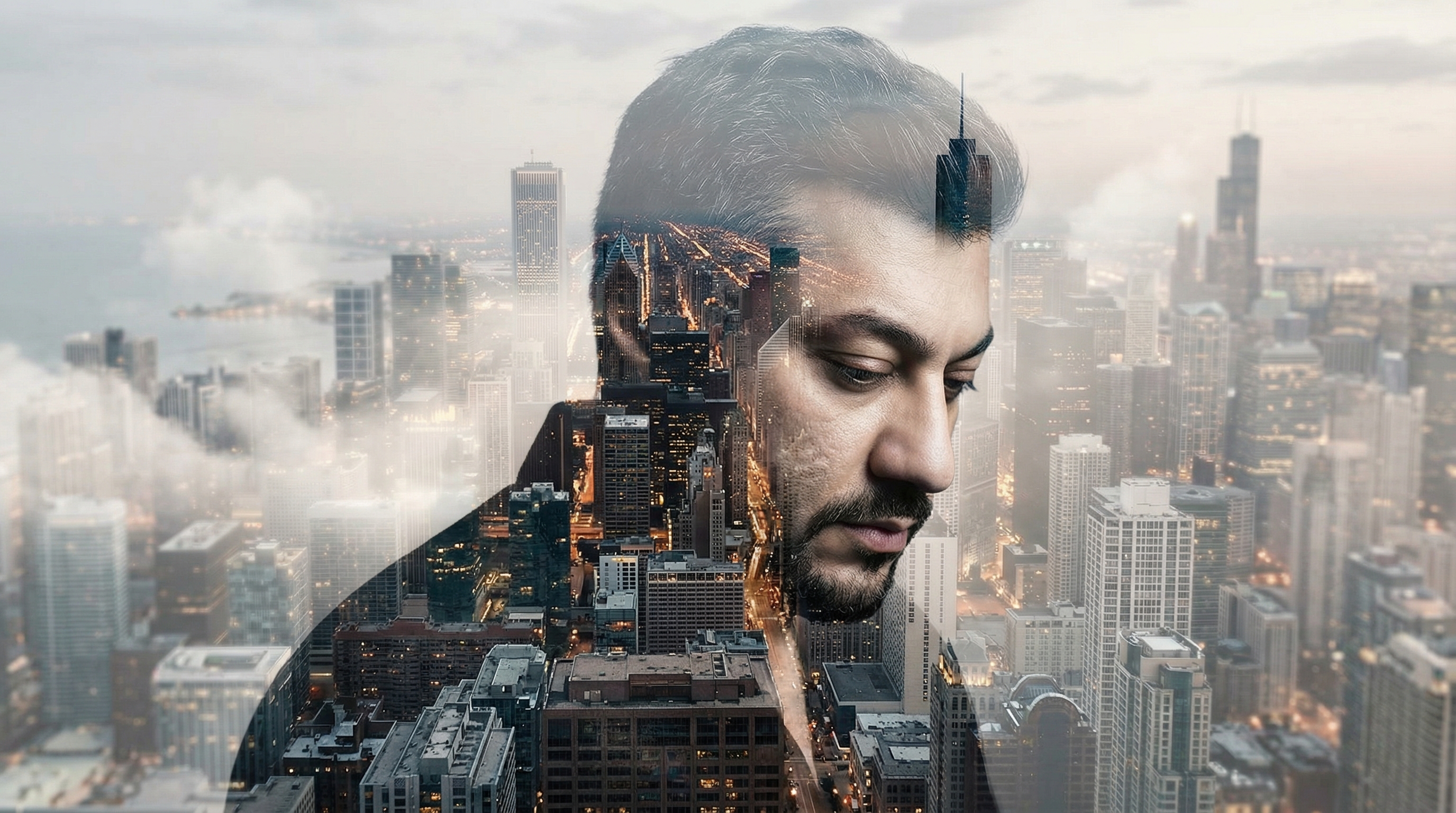
**An essay on the "greatest robbery in history", the disintegration of our laws and the price of the human soul...**
imagine writing a book. For years. You bleed onto the pages. You sacrifice nights, relationships, your mental health. Every sentence is a piece of you, written with blood, tears and sweat. And tomorrow, an anonymous user presses a button, enters your name as a prompt, and a machine generates your exact thoughts, your style, your lifeblood in three seconds. Infinitely often. Free of charge. Is that still inspiration? Or is this the end of everything we as creators have ever believed in?
Think back to February 2020 for a moment. If you looked closely, you heard a few people talking about a virus abroad. But most of us weren't looking closely. The stock market was doing great, we were going to restaurants, shaking hands and planning vacations. If someone had told you that you would soon be hoarding toilet paper, you would have called them crazy. And then some even ordered a LIEFERANDO JACKET from Amazon so that they could go out on the streets of Munich at 9pm during the lockdown. And then, within three weeks, the whole damn world changed.
I'm telling you this because right now we're in the "this-all-seems-exaggerated" phase of something much, much bigger than Covid. Much bigger than the internet and the cell phone era combined. I mean, it's about 99% of jobs in the next 25 years. I often just give friends and family the polite version. The cocktail party version. Because the honest version sounds like I've lost my mind. But the gap between what I say and what actually happens has become too big.
And now take a look at where we stand. We cling to an invisible shield: copyright law. We believe our laws protect us. Copyright law, quotation law, copyright, intellectual property, patents. But I'm going to tell you the hard truth, even if you already know it:\
\
**This sign is already broken. It's a relic from a time that no longer exists. A shadow of the past
The law was made for humans, not algorithms. My own lecturer at the AI Academy, Rolf Behovits, a truly brilliant mind who teaches us media law, even he is struggling to find answers as to exactly what the future looks like. He stands there at the front, enthusiastically teaching us the paragraphs, and you can just feel how much our legal system is reaching its absolute limits. The legal code was written for a world that is disappearing before our very eyes. The rules may still apply to the individual, but the multi-billion dollar corporations that started this theft will pay a penny in fines if necessary and carry on undisturbed. Copyright was invented to punish the thief who copies a physical book. But how do you punish a machine that "digests" billions of books, images, texts and music in milliseconds?
### The biggest heist in human history
They call it "machine learning". They call it "training".
But let's just call it what it really is: it's the biggest heist in human history.
Think of the great robberies in our world history. Think of the art heist at the Isabella Stewart Gardner Museum in Boston in 1990. Thieves walked in wearing police uniforms and cut 13 masterpieces by Rembrandt and Vermeer out of their frames. Value: half a billion dollars. A shock for the art world.
Think of the Brink's-Mat robbery in London in 1983, where they stole gold bars worth 26 million pounds. Or Mt. Gox, the digital heist in which billions worth of bitcoins disappeared.
They were all amateurs. Do you understand that? They stole objects. Physical things or digital currencies that you could count. But OpenAI, Midjourney, Adobe, Anthropic and Meta? They didn't just steal a Rembrandt painting. They stole the fucking *concept* of Rembrandt. They sucked the internet dry. Every photo you've ever uploaded to Facebook. Every article a journalist has written under stress. Every screenplay. Every painting from the Prado, from the Louvre, from every ArtStation page and every DeviantArt account. 5.030,000 movies. Thousands of hours of copyrighted music from Michael Jackson to Maria Callas.
Without breaking down a single door. Without wearing a mask. Without asking. Without permission. Without payment and in the end they even left their photo with a thank you note.
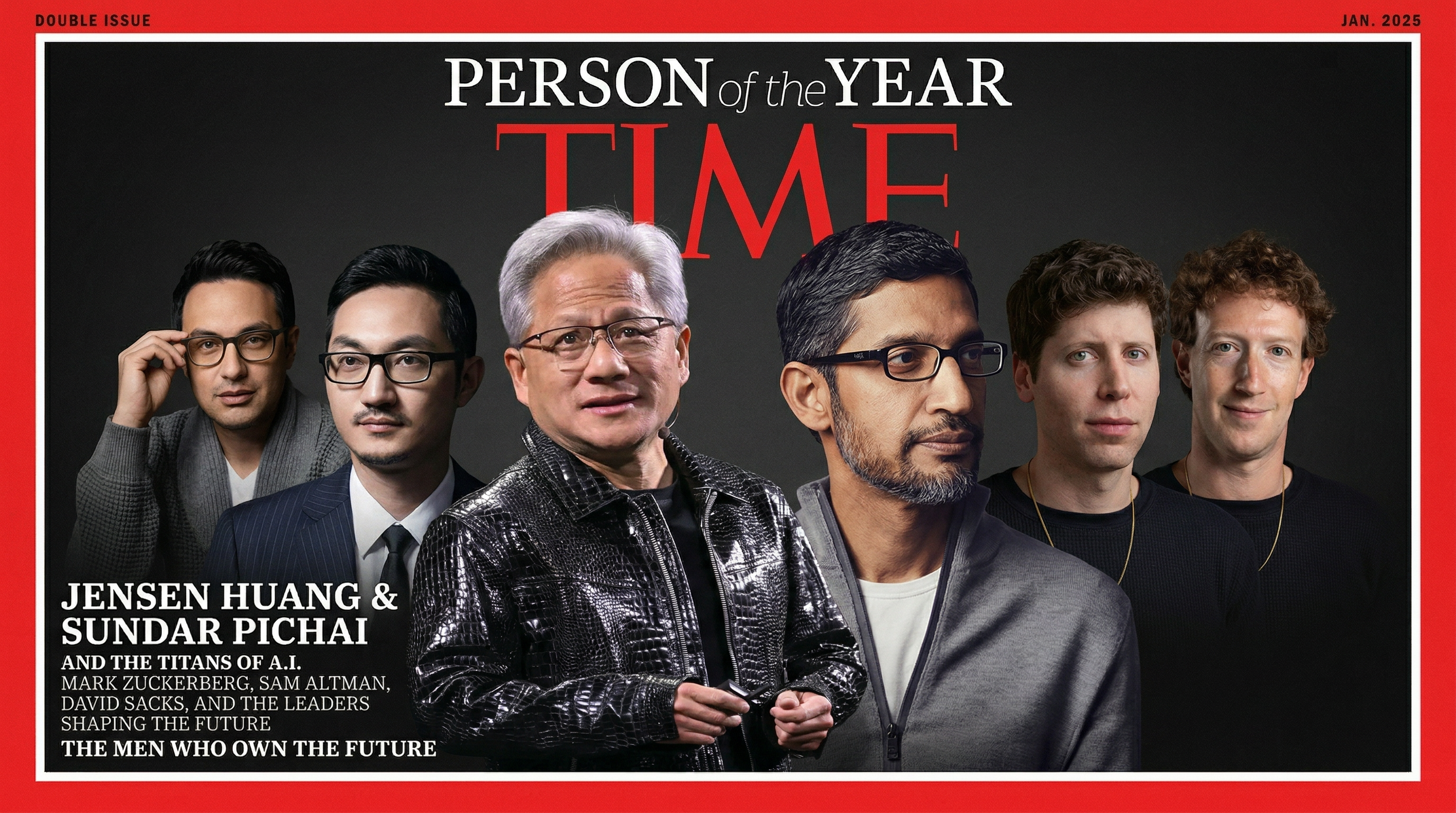
They have thrown the collective human soul into a giant, invisible blender to turn it into a product that they are now selling back to us for 20 euros a month as a "revolution". If you rob a bank, you go to jail. If you rob the soul of all mankind, you end up on the cover of Time magazine and get 10 billion dollars from Microsoft and are a god to the early adopters.
### The helpless attempt at regulation: guides to nowhere
Remember the discussions in university corridors? Universities across the country are panicking right now. They are setting up working groups and hastily writing documents with titles like: "Framework for dealing with AI tools at universities".
It's almost pitiful. They are writing guidelines that say: "AI may be used for brainstorming, but not for writing the final paper or the final code."
But how are you going to prove that? How is a lecturer supposed to check that?
There are no reliable watermarks for AI-generated text or AI code. You're trying to stop a tsunami with a fishing net. Students have long used GPT-5 or Claude to structure, write and format complete master's theses. Universities invoke academic integrity and old exam regulations, while students use tools that are smarter than the professors who grade them. Institutions act as if AI is just a better calculator. They don't realize that the calculator has just started to invent the formulas itself.
I've met several script writers in the last few weeks. Seasoned people from the industry. And they are trembling in fear of AI. They sit there and simply don't know what to do next. Their life's work, their ability to put emotions into words - suddenly degraded to a simple data set.
And then you read the comments. Professors who write under my content on LinkedIn. You can feel the naked fear just through their words. The fear that tomorrow hardly any students will spend €40,000 to study CGI and computer animation. Why should they? When a 14-year-old from China can do exactly what a graduate can do after years at an expensive private university in Düsseldorf for 90% less salary on his nursery laptop.
We all know that. We see it every day. And yet we sometimes ignore it and cling to the hope that real art will somehow survive.
### "But I tried AI and it wasn't that good"
I hear this all the time. "AI hallucinates", "AI makes mistakes", "AI doesn't understand my nuances".
If you tried ChatGPT in 2023 or early 2024, you were right. But that was two years ago. In AI time, that's the fucking stone age. The models that are available today are unrecognizable.
And then it happened. One click. Not like a light switch... more like the moment you realize that the water, which has been slowly rising, is now up to your chest. The new models - GPT-5.3 Codex, Claude Opus 4.6 - these are no longer incremental improvements. This is something completely different.
AI used to be a tool that you had to control. Today, you tell the AI what you want, walk away from the computer for four hours and come back to finished work. It iterates. It tests itself. And the most frightening thing: it shows something that feels like judgment. Like taste. That inexplicable sense of what the "right" decision is that we always said a machine would never have.
And it doesn't stop at theft. It's now about reproduction.
Do you know what the GPT-5.3 technical document said? That the AI helped create itself. It debugged its own code. The AI is now intelligent enough to contribute to its own improvement. Researchers call this an "intelligence explosion". The first generation builds the next. And the machine is becoming ever faster, ever smarter, ever more unstoppable.
As Yuval Noah Harari so aptly put it: "AI is the first man-made technology that can improve itself."
### The bitter irony of the terms of use (ToS)
And the absolute cheekiness is in the details. Have you ever read the actual Terms of Service of one of these AI tools? Take a look at Midjourney or OpenAI.
It says something like: "You are the creator of the prompt. You retain all rights to the generated image or text."
Sounds great, doesn't it? You are now the "artist".
But read on. In the next clause, hidden deep in the small print, they wash their bloody hands of it: "Should the generated work infringe the copyrights of third parties, you as the user assume full liability. You release us from all legal claims."
They train their machine with stolen data. They give you a tool that inevitably commits copyright infringement. And if Disney or Universal Music sues, they simply throw you, the user, under the bus.
This becomes particularly absurd with specific formats such as music or video.
Use a tool like Suno AI for music or ElevenLabs for voice cloning. You can have a song generated today that sounds 1:1 like The Weeknd. The AI has learned the voice, the cadence, the breathing of The Weeknd. Who now owns the copyright to this song? According to the platforms, you, because you wrote the lyrics prompt. According to The Weeknd's record label, you belong in jail. And the AI company? It's sitting in California grinning and counting the subscription fees. It's a legal vacuum, a wild west where the sheriffs (our laws) are still shooting muskets while the bandits are wielding laser guns.
What does the law actually protect? The victim.
Vincent van Gogh only sold one painting during his lifetime. He painted out of sheer desperation, out of love, out of madness. He cut off his ear because the pain of existence was too great. Each of his paintings is a silent cry for connection. His copyright was his soul.
An AI has no madness. It has no pain. It only has parameters and probabilities. When an AI today generates a painting "in the style of Van Gogh", it doesn't just steal brushstrokes. It steals the meaning of suffering. It makes the human victim worthless.
### The new order in entertainment
Many believe they are safe. That only the "creative" or "easy" jobs will fall.
Bullshit. If your job takes place at a screen - if you read, write, analyze, decide, communicate through a keyboard - then AI is coming for significant parts of your job.
In a year's time, photorealistic AI films will be rushing through all media channels like red blood plasma through the body. People like us, people like me, will be the new order in the entertainment business, and a 14-year-old kid in Bangkok will be able to create a 90-minute movie in two to three weeks.
With zero budget. Without leaving the house. Without asking anyone's permission.
The originality of the story will determine the value of the product. Why go through the agony of fundraising and lengthy collaboration when all you need is a keyboard? Then it's just a matter of creating a platform to showcase and monetize this new form of storytelling. No laws, no rules, no regulations will be able to stop this. The moment someone complains that their copyright has been infringed, the film has already reached billions of people and can no longer be stopped. We're talking about one hour after publication.
The movie won't cost much because it hardly cost anything to make. One or two of these films will break through the thin commercial membrane and attract clicks, attention and advertising money. This is just the beginning - and it will happen very quickly.
.png)
### Greed beats justice
Why is all this happening? Because money rules.
The CEOs of the big corporations don't care that they are destroying the livelihoods of millions of artists and knowledge workers. It's cheaper. It's faster. It makes share prices explode. Why would a studio still pay writers when ChatGPT spits out the plot in seconds? Why pay a graphic designer, a consultant, a programmer? They invoke "fair use" or "efficiency". But there's nothing fair about it.
The internet was a weird, crazy place back when it started. It was experimental, full of creative things that are still happening today. But today it feels like a giant shopping center. One CEO recently said we're building a system that's like a new country being created overnight. 50 million citizens, each smarter than any Nobel Prize winner who ever lived. They never sleep. They think a hundred times faster than we do. That's what we're bringing into the world right now.
### Epilogue: We are the tree. We are the whale.
As long as our economy ticks like this and AI companies remain unregulated to serve investors and governments, trees will continue to be cut down, whales killed and the earth plundered. We will continue to pump oil out of the ground, even though we are destroying the earth and leaving a worse world for future generations.
This is short-term thinking that pays homage to the religion of profit at all costs. As if by magic any company acting in its own interests will achieve the best result for all.
It's been affecting the environment for a long time. And the scary thing - and hopefully the last straw we have as a civilization to wake up and see how wrong this theory is - is the realization that we are now the tree, we are now the whale. Today we are the raw material.\
\
We make more money staring at a screen, consuming advertising, than we do living a fulfilling life. The consequences of this thinking are already visible. We see companies tricking us with powerful, high-performance artificial intelligence and remotely controlling our attention. Instead, we should focus on our goals, our values and our real lives. Because the only difference between humans and artificial intelligence is that artificial intelligence will never have "experiences". It can only read about other people's experiences, but it will never sense or feel them.
When you design the space in which the story takes place, nothing ugly can enter. So, get up, brush the dust off your shoulders, put your crown on properly and run. It's about saving the human race rather than a few paragraphs and laws. In 2025, 99% of humanity will be unemployed, what good will a few stop signs do us today. Try to understand how you and your descendants can get below the 1%.
# TheKid out
Contact: hello@heisenberg-studio.com — Heisenberg Studio, Berlin, Germany.